
Shankarrao Jagtap Arts and Commerce College, Wagholi was established in June 2001 to provide degree-level higher education to students from the rural, hilly, and drought-prone northern region of Koregaon Taluka. The institution primarily serves students from economically and socially disadvantaged backgrounds, including small farmers, labourers, and landless families, for whom access to higher education in Satara was financially difficult.
To address this need, the college offers B.A. and B.Com. programmes, enabling students—especially girls, who now constitute nearly 60% of the total enrolment—to pursue careers in education, employment, business, and public service. In addition, short-term computer courses through the Computer Academy provide skill-based training aligned with emerging employment opportunities.
The B.A. programme is offered on aided and unaided basis, while the B.Com. programme is permanently unaided. The B.A. programme includes the departments of Marathi, Hindi, Economics, History, Political Science and Geography. The departments of Marathi, Hindi, History, and Economics are aided departments, whereas English and Sociology are run on an unaided basis. The computer courses are self-financed. At present, the institution caters to around 350 students across all programmes.
The college follows a transparent and inclusive admission process and implements the university-prescribed curriculum, ensuring relevance to students’ academic and career needs. Teaching–learning is student-centric, incorporating lectures, projects, seminars, group discussions, study tours, guest lectures, and remedial guidance. A continuous evaluation system—including assignments, projects, internal tests, and university examinations—is followed to enhance learning outcomes and research awareness.
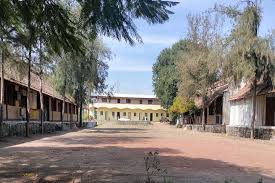
Despite functioning in a rented building with limited infrastructure, the institution strives to conduct maximum curricular, co-curricular, and extra-curricular activities. The library houses about 15,000 books, supporting academic growth. The college maintains a healthy academic and administrative environment supported by various committees such as the Grievance Redressal Cell, Sexual Harassment Prevention Committee, Career and Competitive Examination Cell, and Discipline Committee.
Under the Lead College Scheme, the institution regularly organizes workshops and academic programmes that benefit students, faculty, and the local community. NSS activities and special camps promote social responsibility and community engagement. Parent–teacher and alumni interactions help strengthen institutional functioning.
The college is staffed by young, qualified, and dedicated faculty members who actively participate in research, extension activities, and professional development programmes. There is strong coordination among faculty, administrative staff, and management.
Recently, the institution has successfully purchased three and a half acres of land, marking a significant milestone in its long-term development plan. This important step reflects the institution’s strong commitment to providing a permanent, spacious, and well-equipped campus for its students and staff.
In the near future, the institution plans to construct a modern college building with all necessary academic, administrative, and support facilities. The proposed infrastructure will include well-ventilated classrooms, fully equipped laboratories, a rich and expanded library, ICT-enabled teaching–learning resources, seminar halls, and administrative offices to ensure a conducive environment for quality higher education.
This development will play a crucial role in fulfilling the institution’s vision of inclusive, value-based, and quality higher education, contributing to the educational and socio-economic development of the region.
In March 2023, the college is accredited by the National Assessment and Accreditation Council (NAAC), Bengaluru, with a B+ Grade (CGPA 2.56). This accreditation reflects the college’s commitment to quality education, academic excellence, institutional governance, and continuous improvement.
The college continuously strives for the overall development of students through diverse academic, curricular, co-curricular, and extra-curricular activities, aligning with national quality benchmarks and higher education standards.